Nursery • Bedding • Infant sleep
A Safer Nursery Sleep Setup: Organic Materials and Firmness Explained
A nursery may be filled with soft colors and carefully chosen fabrics, but an infant’s sleep space calls for a different kind of simplicity. The essentials are a firm, flat surface, a correctly fitted sheet, and an empty sleep area. Material choices can matter to families, yet no fiber, label, or finish takes the place of safe-sleep guidance.
A new sleep space often begins with a list: mattress, sheets, blankets, perhaps a protective pad or a soft topper. In an adult bedroom, these layers can be ways to adjust comfort. In a nursery, however, more is not necessarily better. For an infant, the surface should remain firm and flat, and the space around the baby should be clear of loose bedding and soft objects.
That distinction helps put “organic” and “natural” materials in perspective. Families may reasonably want to know what a fabric is made from, how it was processed, and how it should be washed. But an organic label does not establish that a sleep product is safe for an infant, and a natural material is not automatically the right choice for a crib. First consider the sleep setup and current public health guidance; then compare materials among products that are appropriate for that setup.
This guide explains how to think about firmness, fit, materials, labels, and care instructions. It is general information, not a substitute for advice from a pediatric clinician or the latest recommendations from public health and product-safety authorities.
Start with the sleep surface, not the fabric
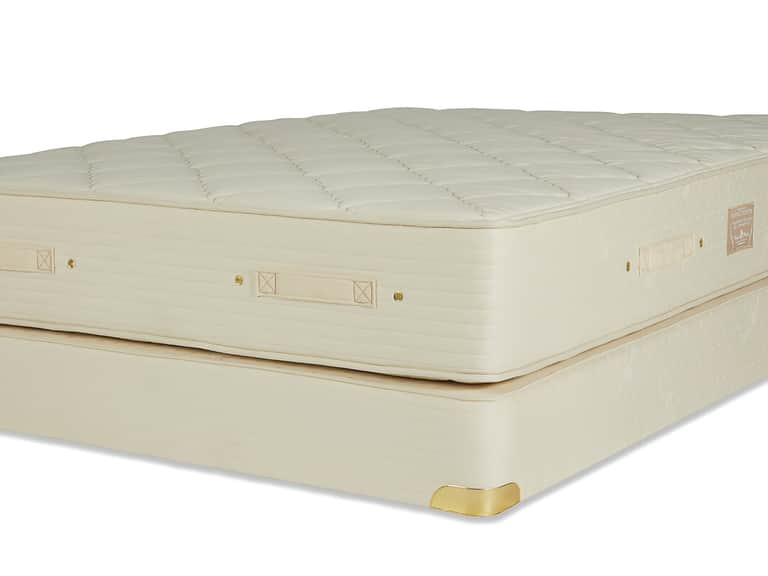
A safe infant sleep environment is built around a firm, flat, non-inclined surface designed for infant sleep, such as a crib, bassinet, or play yard that meets applicable safety standards. The mattress should fit the product as intended, without hazardous gaps at the edges. Use only the mattress specified or permitted by the manufacturer and cover it with a fitted sheet made for that mattress.
The word firm can sound subjective. It does not mean hard in the sense of an uncomfortable adult mattress, nor does it mean adding a softer layer to make the surface feel more welcoming. An infant mattress should not readily conform to the baby’s shape. A firm, level surface helps preserve a clear breathing space around the infant’s face if the baby shifts position.
A simple practical check is to press the mattress with your hand and see whether it springs back promptly, without retaining a deep impression. That check is not a certification test and cannot determine whether a mattress complies with safety requirements. The product’s intended use, applicable standards, condition, fit, and manufacturer’s instructions matter more than a home firmness test.
Keep the sleep surface flat and level. Do not raise one end of a crib or bassinet mattress to address congestion or reflux unless a clinician gives specific advice and the product instructions allow it. Inclined sleep products and improvised wedges can create hazards. If an infant appears uncomfortable, has trouble breathing, or has persistent feeding or reflux concerns, ask a health professional rather than changing the angle or softness of the sleep surface.
The basic arrangement is deliberately spare: infant on the back, on a firm and flat surface, with only a fitted sheet. Keep pillows, quilts, comforters, loose blankets, stuffed toys, positioners, bumpers, and other soft items out of the sleep space. A topper or padded mattress protector should not be added unless the sleep-product manufacturer specifically identifies it as part of the approved setup.
What “organic” can—and cannot—tell you
Organic materials can be meaningful to families for reasons that range from farming practices to personal values. Organic cotton, for example, refers to a particular way of producing the fiber under an applicable certification system. The term does not, by itself, describe every step of manufacturing, prove that a finished item is free of all chemical substances, or confirm that it is suitable for infant sleep.
Labels can use similar-sounding terms with different meanings. “Organic,” “natural,” “eco-friendly,” “non-toxic,” and “chemical-free” are not interchangeable guarantees. Ask what specific material or finished product the claim refers to, which independent certification or standard supports it, and whether the claim applies to the whole item or only one component. When information is vague, look for detailed product documentation rather than relying on reassuring language alone.
The most important questions are practical. Is the mattress intended for infant sleep? Does it meet relevant safety requirements? Is it the correct size for the crib, bassinet, or play yard? Does the manufacturer identify the mattress as compatible with the product? Can its cover be cleaned in the way the instructions require? A preferred fiber can be a deciding factor between otherwise appropriate options, but it should not override these basics.
Materials also behave differently. Cotton may feel familiar and is widely used in bedding; wool can help manage moisture and temperature in some products; latex is resilient; and foam products vary in construction and firmness. These descriptions do not determine whether a component belongs in an infant sleep space. A soft material, a breathable-sounding fabric, or a product marketed as temperature-regulating should never be treated as a substitute for a firm surface and an uncluttered sleep area.
Fit is a safety question
A correctly sized mattress should fit snugly in its intended crib or bassinet, as described in the manufacturer’s instructions. Gaps between the mattress and the sides can create a risk. Do not try to solve poor fit with rolled towels, extra padding, folded blankets, or homemade fillers. If the mattress seems too small, too large, damaged, or incompatible, stop using that combination and contact the manufacturer or choose a product designed for the sleep space.
Sheets require equal attention. Use a fitted sheet designed for the exact mattress dimensions and depth. It should remain secured at the corners and not pull loose when the baby moves. A sheet that is too large, too deep, or held in place with makeshift fasteners can bunch or detach. Avoid layering a second sheet over the first as a shortcut for easier changes unless the sleep-product maker specifically provides instructions for an approved system.
Before the first use, assemble the crib or bassinet according to its instructions and check that all components are intact. Keep the manufacturer’s manuals and labels, including details about mattress compatibility and cleaning. If a product is secondhand, inspect it carefully for damage, missing parts, recalls, and a known history. Do not use items that have been altered or whose safety condition cannot be established.
Why toppers and extra padding do not belong in the crib
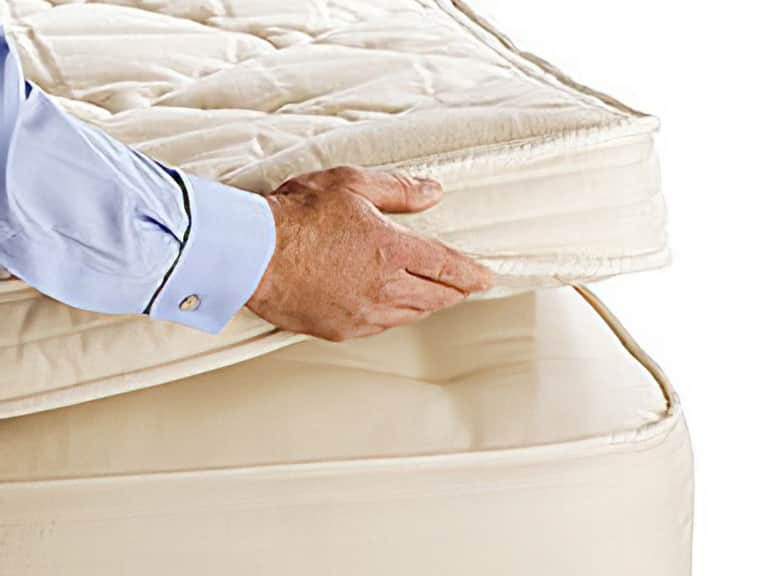
For adults, a mattress topper can soften a bed or change its feel. That adult use does not translate to an infant sleep surface. A topper, pillowtop pad, quilted pad, or cushioning layer may change the surface’s firmness, introduce loose or compressible material, or interfere with the intended fit of the sheet. Do not add one to an infant’s crib, bassinet, or play yard unless the product’s manufacturer explicitly identifies it as an approved component for that model.
The same caution applies to padded mattress protectors. A protector that is not approved for the sleep product may alter the surface or fit, even if it is marketed as thin, breathable, waterproof, or organic. Check the manufacturer’s guidance for the specific sleep space and mattress. If a protector is permitted, use only the type and configuration specified, and make sure the fitted sheet still fits securely.
Loose blankets and soft bedding are not made safer simply by being made from natural fibers. A cotton quilt remains loose bedding; a wool blanket remains a blanket. Keep the infant’s sleep area clear. If warmth is a concern, ask a clinician about appropriate clothing or a wearable blanket designed for infant use, following its size and use instructions. Wearable products should not cover the baby’s head or replace a safe sleep surface.
Care labels, cleaning, and everyday checks
A useful nursery item is one caregivers can clean and maintain as directed. Read the mattress, crib, and sheet instructions before use. Some mattress covers are not removable; others have specific cleaning limits. Unapproved washing, soaking, steaming, or chemical treatment can damage a cover or core and may affect the product’s fit or performance. Follow the instructions rather than assuming that a natural or organic item needs special care—or can tolerate any cleaning method.
For sheets and other washable textiles, check water temperature, detergent guidance, drying instructions, and any restrictions on bleach or fabric softener. Strong fragrances may bother some household members, but choosing a fragrance-free product does not establish that the entire sleep setup is safe. Rinse and dry items fully as directed, and do not put a damp or altered cover back into use if it no longer fits properly.
Inspect the sleep space regularly. Look for torn fabric, loose seams, damaged zippers, a sheet that no longer stays fitted, or a mattress that has become misshapen. Check that the mattress remains correctly positioned and that the crib or bassinet is assembled as instructed. Follow any manufacturer guidance about replacement, weight limits, and when to stop using a particular product.
A thoughtful care routine is not complicated: keep instructions accessible, wash only as directed, replace damaged items, and recheck fit after laundering. A sheet can shrink; a fastener can wear; a mattress can be moved during cleaning. Small checks help preserve the intended arrangement without adding accessories that change the sleep surface.
Temperature and the nursery environment
A nursery need not feel warm and soft to be comfortable. Dress the infant appropriately for the room and avoid overheating. Guidance from public health organizations commonly emphasizes keeping the baby’s head uncovered during sleep and watching for signs of overheating, such as sweating or a chest that feels unusually hot. Because room conditions and infant needs vary, ask a pediatric clinician for advice specific to your family.
Claims about moisture-wicking, cooling, or breathable textiles can describe useful fabric characteristics, but they do not make loose bedding safe. Nor does a mattress’s material composition guarantee that an infant will maintain a comfortable temperature. Keep the focus on a clear sleep space, suitable clothing, and an environment that follows current clinical guidance.
Room-sharing—placing the infant’s separate sleep surface in the caregivers’ room—can be part of a safer sleep plan, particularly during the early months. It is different from sharing an adult bed. Follow current recommendations from trusted health authorities, and make sure the baby returns to the designated infant sleep surface after feeding or comforting.
A careful way to compare nursery bedding
When comparing products, separate the questions of safety, materials, and convenience. First confirm that the item is intended for infant use and compatible with the sleep space. Then examine its construction and fit. Finally consider fiber preferences, cleaning, durability, and the information the manufacturer provides. This order helps prevent appealing material claims from obscuring more important requirements.
- Intended use: Is the item made for the specific infant sleep product, rather than adapted from adult bedding?
- Standards and documentation: Does the manufacturer provide clear safety, sizing, and care information? Can the product be checked against relevant government guidance or recall notices?
- Fit: Does the mattress fit the crib, bassinet, or play yard as directed, and does the fitted sheet stay secure?
- Materials: Are fiber and finish claims specific and verifiable? Do they describe the whole product or only one part?
- Maintenance: Can the item be cleaned as required without compromising its structure or fit?
- Added layers: Does the manufacturer explicitly approve any protector or pad? If not, leave it out.
If a claim is difficult to verify, contact the manufacturer and ask for the exact model’s instructions. A label that says “crib-sized” is not the same as evidence of compatibility with a particular sleep product. When in doubt, consult the crib or bassinet manufacturer and a pediatric health professional.
Common questions families ask
Is an organic mattress automatically safer?
No. Organic describes aspects of material production or certification; it does not, by itself, establish that a mattress is suitable for infant sleep. Verify intended use, applicable safety information, firmness, flatness, condition, and fit.
Can a soft topper make a firm mattress more comfortable for a baby?
Do not add a topper to an infant sleep surface unless its manufacturer specifically approves that component for the product. The recommended setup is a firm, flat surface with a fitted sheet and no loose bedding.
Are natural fibers always the best choice?
Not necessarily. Fiber preference is personal, and natural origin alone does not tell you whether a product is safe, compatible, durable, or easy to clean. Evaluate the whole product and follow its instructions.
What if an infant will not settle on a firm surface?
Do not soften, incline, or add objects to the sleep space as a workaround. Discuss persistent settling difficulties with a pediatric clinician, who can help assess possible causes and suggest safe approaches.
A simple checklist before bedtime
- Place the baby on their back for every sleep, following current safe-sleep guidance.
- Use a firm, flat, non-inclined infant sleep surface that is in good condition and designed for the crib, bassinet, or play yard.
- Check that the mattress fits as specified, with no improvised fillers or unsafe gaps.
- Use one properly fitted sheet made for the mattress.
- Keep pillows, blankets, quilts, stuffed toys, bumpers, positioners, and unapproved pads or toppers out of the sleep space.
- Follow all product assembly, cleaning, and maintenance instructions.
- Use current guidance from trusted public health authorities and ask a pediatric clinician about individual concerns.
Safe nursery design is less about creating a nest of layers than about knowing which layers to leave out. A family can still make thoughtful choices about cotton, certification, laundering, and the environmental story behind a product. The foundation remains straightforward: a suitable, firm, flat surface; a secure fitted sheet; and an uncluttered space for sleep.
A note on guidance
Safe-sleep recommendations and product rules can change. For the most current advice, consult recognized public health sources such as the American Academy of Pediatrics, the U.S. Consumer Product Safety Commission, and your local health authority. Product manuals and labels are essential for assembly and compatibility, but they do not replace medical advice tailored to an infant’s needs.